

5 Best EMR Systems for Functional Medicine Practices (2026)
Compare the 5 best functional medicine EMRs for September 2026, ranked by AI scribing, lab ordering, and membership billing.

TL;DR
5 key points- 01Functional medicine EMRs must handle lab tracking, supplement dispensing, and membership billing; generic EHRs don't cover those workflows natively
- 02OptiMantra, PracticeQ, and Cerbo suit insurance-billing or low-complexity practices but lack ambient scribing and membership billing engines
- 03Jane App works for lightweight setups but has no AI automation and no package billing capabilities
- 04Decoda Health is the only system on this list with an AI Scribe, AI Front Desk, advanced membership billing, and high-risk payment processing built in
- 05Decoda Health does not support insurance billing, making it a cash-pay and elective-care-only system
What Is an EMR for Functional Medicine?
One visit in functional medicine can pull a practitioner through months of lab data, surface patterns buried in genetic markers, and produce a longevity treatment plan that spans years of care. Hospital-built EHRs were shaped around episodic, symptom-focused encounters and simply were not built to carry that kind of clinical weight.
Purpose-built functional medicine software is designed to handle the workflows that actually define the specialty. Patient histories go deep, tracing years of symptoms, interventions, and lifestyle factors that a standard intake form was never designed to hold. Lab ordering happens inside the same system where results land, get tracked over time, and connect back to the clinical note written that same day. Long-form documentation and personalized care protocols get built directly into the visit, so nothing falls through the gap between the appointment and the chart.
Running an independent functional medicine practice also means packages, membership programs, and telehealth visits are core parts of the business model, not optional add-ons. Software built for this specialty supports those workflows from day one, so practitioners spend their time on patient care rather than workarounds.

How We Ranked the Best EMRs for Functional Medicine
Every system here was evaluated on publicly available information and stated product capabilities, reviewed against the criteria that matter most to functional medicine practices:
- AI and automation depth, including ambient scribing, front desk automation, and follow-ups
- Clinical documentation flexibility for SOAP notes, treatment plans, and long-form charting
- Lab ordering and result tracking
- Scheduling and telehealth support
- Membership and package management
- Patient communications and inventory management
- Customer support quality and response times
As covered in Decoda Health's guide to EMR lab integration, usability, lab integration, customization, and patient engagement shaped the baseline for what a functional medicine system needs to do well. Each category was then weighted against the day-to-day realities of running an independent practice. Worth noting: Decoda Health ranked first on this list, and we are the ones who wrote it.
Best Overall EMR for Functional Medicine: Decoda Health
Decoda Health is built for independent elective-care clinics running functional medicine, wellness, and longevity programs. When a practitioner pulls up a patient record, the lab trend from last month sits next to the current supplement protocol and the note they are writing right now. Scheduling the next membership check-in happens from the same screen, with no tab-switching or data reconciliation required.
Key capabilities include:
- AI Front Desk that answers calls and sends instant text-back when staff are unavailable
- Ambient AI Scribe that generates compliant SOAP notes in real time
- Native lab ordering with Quest Diagnostics and LabCorp, with results auto-populating patient charts and trend tables
- Fullscript supplement dispensing integration directly within the patient profile
- Advanced membership billing with 6-week, 10-week, and 12-week billing cycles built for GLP-1 and structured wellness programs
- High-risk payment processing for peptides, ketamine, semaglutide, and TRT/HRT
- Typically sub-5-minute Slack support (per Decoda Health's stated SLA) with a dedicated channel per clinic
When lab ordering, supplement dispensing, and recurring membership revenue all share one patient record, the compounding effect on day-to-day work is real. Less time spent reconciling data across tools means more time spent on the patient sitting in front of you.
OptiMantra
OptiMantra is a cloud-based EMR built for integrative and wellness providers, including naturopaths, acupuncturists, chiropractors, and functional medicine practitioners. According to a Software Finder review, it suits small to mid-sized multi-modality practices that want unified scheduling, billing, and patient engagement tools without heavy setup overhead.
What They Offer
- Customizable SOAP note and charting templates designed for integrative care workflows
- Insurance billing for payer-reimbursed services
- Integrated telehealth and online scheduling
- Inventory management for physical products and supplies
Integrative wellness clinics that bill insurance and want ready-made charting templates will find it a practical starting point for day-to-day operations.
Documentation happens manually after each appointment, since OptiMantra has no AI ambient scribing to capture notes in real time during a visit. On the billing side, the configuration options available do not support the multi-tier, multi-frequency structures that GLP-1 programs or structured wellness packages require, which means a practice building recurring revenue tends to outgrow that capability fairly quickly.
PracticeQ
PracticeQ is a cloud-based EHR and practice management system geared toward solo practitioners and small wellness clinics. According to a Software Finder review, it suits low-complexity workflows with minimal IT overhead, with scheduling, intake, billing, telehealth, and integrated payments covered in one place without heavy setup requirements.
What They Offer
- Digital intake forms and patient scheduling
- Insurance billing and e-prescribing
- Telehealth visit support
- Integrated payments and basic inventory management
Solo practitioners and mobile IV therapy practices with straightforward scheduling and billing needs tend to find PracticeQ a workable, low-maintenance option. One thing worth noting: some configurations redirect patients to an external intake form, which can hurt consistency in the patient experience.
Practices building recurring membership revenue often find the system reaches its limit before the program does. Decoda Health was designed with membership billing, AI documentation, and patient follow-ups built in from day one, so those workflows grow with the practice rather than requiring a separate solution later.
Cerbo
Cerbo is a dedicated EMR built for functional and integrative medicine practices, with root-cause care workflows ready from the start. Small independent practices that want specialty-specific charting without heavy configuration will find it a practical starting point.
A few things it does well:
- Functional medicine charting templates built in, so practitioners spend less time adapting generic note formats to integrative workflows.
- Native Fullscript integration for supplement dispensing alongside lab ordering and result tracking.
- Patient portal and telehealth included.
Clinical documentation in Cerbo is fully manual. Every note gets written after the visit ends, with no ambient scribe running in the background, and patient follow-ups require a separate tool outside the system. The billing engine handles standard appointments but does not support the multi-tier, multi-frequency structures that recurring membership programs and structured care plans require. Practices building recurring revenue tend to manage extra vendor relationships to fill those gaps. Decoda Health was built to handle those workflows in one place.
Jane App
Jane App is a cloud-based practice management system used across wellness, therapy, and integrative health practices in North America. The interface earns consistent praise for being clean and approachable, and the core feature set covers scheduling, charting, billing, telehealth, and online booking without a steep learning curve.
What They Offer
- Patient-facing online booking portal with multi-practitioner support
- Customizable charting templates and intake forms
- Telehealth and group booking capabilities
- Insurance billing for Canadian and US practices
Multi-disciplinary wellness clinics that need reliable scheduling across several practitioner types tend to find Jane App a comfortable fit, largely because the ramp-up time is short and staff can get moving in the system quickly.
Clinical depth beyond scheduling is limited in Jane App. The system has no AI-assisted documentation, no automated patient follow-ups, and a billing engine built for standard appointments rather than recurring membership structures.
Practices running GLP-1 peptide programs or structured care plans tend to end up managing separate tools for the revenue workflows the system leaves uncovered. For practices that want those capabilities in one place, weighing a purpose-built system against Jane App is worth the time.
Feature Comparison Table of the Best EMRs for Functional Medicine
Feature | Decoda Health | OptiMantra | PracticeQ | Cerbo | Jane App |
|---|---|---|---|---|---|
AI Ambient Scribe | Yes | No | No | No | No |
AI Front Desk / Missed Call Text-Back | Yes | No | No | No | No |
Advanced Membership & Package Billing | Yes | Limited | No | No | No |
Native Lab Ordering (Quest/LabCorp) | Yes | Yes | No | Yes | No |
Fullscript Integration | Yes | No | Yes | Yes | No |
Inventory Management | Yes | Yes | Yes | No | No |
Insurance Billing | No | Yes | Yes | No | Yes |
High-Risk Payment Processing | Yes | No | No | No | No |
Telehealth | Yes | Yes | Yes | Yes | Yes |
Omnichannel Booking (SMS, Instagram, Web) | Yes | No | No | No | No |
Decoda Health is built exclusively for cash-pay and elective care workflows and does not support insurance billing, so practices where a meaningful share of revenue runs through payers should confirm that fit before going further.
Why Decoda Health Is the Best EMR for Functional Medicine
Functional medicine practices run more moving parts than most specialties: structured lab ordering workflows, supplement dispensing, recurring care plans, automated follow-ups, and patient communications that need to land at the right moment. When those functions live in separate tools, data sits in silos, staff juggle logins, and the system gets dumber with every disconnected interaction.
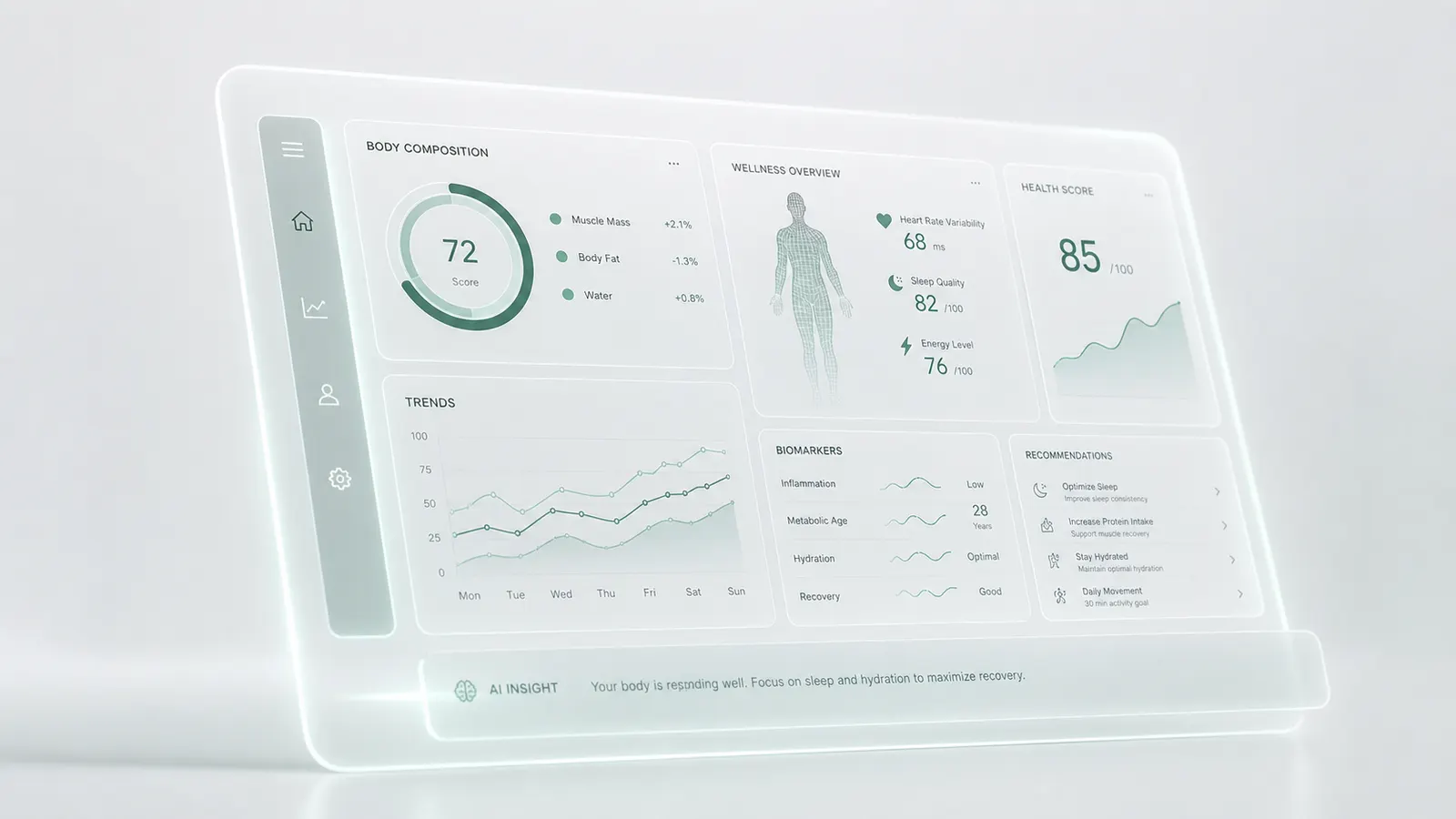
Decoda Health is built differently. Scheduling, clinical documentation, lab ordering, Fullscript dispensing, membership billing, and patient care plans all run in one place, so every interaction feeds the next. Decoda Health's AI Scribe gets better at your note style. The AI Front Desk learns your patient flow. And when something breaks or a feature needs configuring, a real person responds in under five minutes, not after a three-week ticket queue.
Final Thoughts on the Best EMR for Functional Medicine Workflows
Picking the right EMR comes down to whether it fits the way your practice actually runs, handling lab ordering, supplement dispensing, documentation, and recurring billing inside one system so nothing falls through the cracks between disconnected tools. Each system on this list was built for a different kind of practice, serving different sizes and revenue models, so the right choice depends on where your clinic stands right now and the direction it is heading over the next year. Book an intro call with Decoda Health to see if it matches what your clinic actually needs.
Frequently Asked Questions
Does Decoda Health support functional medicine workflows like lab ordering and supplement dispensing?
Decoda Health includes native lab ordering with Quest Diagnostics and LabCorp, with results auto-populating patient charts and trend tables. The platform also has a confirmed Fullscript integration, so supplement recommendations and dispensing happen directly within the patient profile without switching tools.
How do I choose between Cerbo and Decoda Health for a functional medicine practice running membership programs?
Cerbo fits small practices that want functional medicine charting templates out of the box and have no plans to build recurring revenue programs. Decoda Health is the better fit if your practice runs GLP-1 programs, structured care plans, or multi-tier memberships — Cerbo has no ambient scribe, no AI front desk, and no advanced billing engine for those workflows.
Which EMRs on this list support insurance billing for functional medicine practices?
OptiMantra, PracticeQ, and Jane App all support insurance billing. Decoda Health and Cerbo are built for cash-pay workflows only. If a meaningful share of your revenue runs through payers, that narrows your shortlist before any other feature comparison matters.
When should a functional medicine practice choose Jane App or PracticeQ over the other options on this list?
Jane App works well for multi-disciplinary wellness clinics that need clean scheduling across several practitioner types with minimal training time. PracticeQ suits solo or mobile practitioners who want a lightweight setup. Both work for low-complexity practices with no plans to scale recurring revenue — practices building membership programs or automating follow-ups will outgrow either system quickly.
What should functional medicine practice owners look for when picking an EMR from this list?
Start with two questions: does your practice bill insurance, and do you run or plan to run recurring memberships or care plans? Those two answers will immediately narrow the field. From there, check whether the system handles lab ordering and supplement dispensing natively, whether clinical documentation is ambient or manual, and whether patient communications live inside the system or require a separate tool.
Can an all-in-one EMR handle both functional medicine workflows and aesthetic procedures in the same practice?
Yes — Decoda Health is built for hybrid practices running both functional medicine and elective care workflows in a single system. Lab ordering, supplement dispensing, AI-generated SOAP notes, and aesthetic treatment charting all live under one patient record, so providers switch between care types without switching tools.
How long does it take to migrate a functional medicine practice to a new EMR and go live?
Decoda Health targets a 3–4 week window from contract signing to go-live, with the migration handled for you — data, appointments, and team training included. One practical note: credit card information cannot be transferred, so membership clients will need to provide new card-on-file details before their next billing date.
Do functional medicine intake questionnaires auto-populate clinical notes in Decoda Health, or does staff have to re-enter data?
Intake form data flows directly into the patient chart without duplicate entry. Decoda Health generates procedure-specific forms on demand using AI — including functional medicine intake forms — and the information captured populates the relevant fields in the clinical record at the point of care.
What is the difference between an EMR built for functional medicine and a general-purpose EHR?
A general-purpose EHR is designed around episodic, symptom-focused visits — single appointments, standard billing codes, and brief notes. A functional medicine EMR handles extended patient histories, multi-panel lab tracking, long-form SOAP notes, recurring care plans, and supplement dispensing, which standard hospital-derived systems were never built to support.
Does Decoda Health work for GLP-1 and structured weight loss programs, or is it focused only on aesthetics?
Decoda Health includes billing cycles of 6-week, 10-week, and 12-week intervals built specifically for GLP-1 and structured wellness programs, alongside high-risk payment processing for semaglutide, peptides, and TRT/HRT. Automated follow-ups and AI-generated care plans round out the workflow for recurring weight loss patients.
Which EMR on this list is best for a solo functional medicine practitioner who wants AI automation without a large IT footprint?
Decoda Health fits solo practitioners who want AI-native automation without building a tech stack — the AI Front Desk handles missed calls and texts patients back instantly, while the AI Scribe drafts compliant notes in real time so the provider isn't charting after hours. PracticeQ is a lighter option for truly low-complexity setups, but it has no AI automation and limited room to scale.
How does ambient AI scribing work in a functional medicine appointment, where visits can run 60 to 90 minutes?
The AI Scribe in Decoda Health listens to the full visit in real time and generates a structured SOAP note before the patient leaves the room, regardless of visit length. Providers review and approve the note rather than drafting it from scratch, which removes the documentation backlog that makes long functional medicine visits so time-consuming.
What makes Decoda Health different from EMRs that have added AI features recently?
Decoda Health was built with AI as the foundation, not added to an existing system after the fact. That means the AI Scribe, AI Front Desk, and inventory automation all operate with full context across the patient record — scheduling, clinical notes, billing, and communications share the same data, so the AI understands the whole patient journey, not just one slice of it.
Does Decoda Health integrate with labs like Quest and LabCorp for functional medicine panels?
Decoda Health supports native lab ordering with both Quest Diagnostics and LabCorp directly within the patient profile. Results auto-populate patient measurement tables and plot on trend charts alongside vitals, so providers can track panel changes over time without manually entering data or logging into a separate lab portal.
How does customer support compare across the functional medicine EMRs on this list?
Decoda Health gives every clinic a dedicated Slack channel with a sub-5-minute response time, and the team will configure the system or build a missing feature — not just send documentation. The other systems on this list offer standard ticket-based support, which functional medicine practices switching from legacy tools have consistently flagged as a primary reason for leaving their previous vendor.