

Botox and Filler Pricing Strategy for Med Spas
Learn to price Botox and fillers from real costs, covering tiered menus, prepaid packages, per-unit vs. per-area billing, and pricing audits.

TL;DR
5 key points- 01Practices selling Botox at $11-$16 per unit are often at or below break-even once injector time, overhead, and waste are factored in
- 02Botox runs $10-$20 per unit; the median med spa ticket is $216 while the 90th percentile reaches $484, a gap driven by pricing structure
- 03Prepaid unit packages and memberships convert single-visit patients into recurring revenue; packages represent $29 of every $100 spent at med spas, up 38%
- 04Announce price increases in late January or early August, not during peak season, and give patients a prepay window before the new rate takes effect
- 05Decoda Health's checkout checklist supports billing by dose for Botox, Dysport, and fillers while keeping inventory deductions accurate across per-unit and per-area billing structures
Why Copying Competitor Prices Is the Wrong Starting Point
Scanning competitor menus and matching their numbers feels logical. It's fast, it anchors you to the market, and it removes the discomfort of picking a number from scratch. The problem is that your competitor's price tells you nothing about their costs, their injector experience, their product sourcing, or their overhead. You're inheriting their math without knowing if it works.
As Projected Growth Consulting puts it, most med spas copy a nearby practice's fees without analyzing whether those fees actually cover costs. The result is a busy schedule with a thin or negative margin on the services filling it. The rest of this guide walks through a more deliberate approach: start with your real costs, understand the market, then choose a structure that supports actual profit.
Calculate Your True Cost Per Treatment First
Dividing vial price by unit count gives you product cost, not treatment cost. As Ward Advisory details, the true all-in cost per unit includes injector time, room overhead, consumables, and waste. Once those are stacked, practices selling at $11 to $16 per unit are often at or below their real break-even.
Work through each cost layer per appointment:
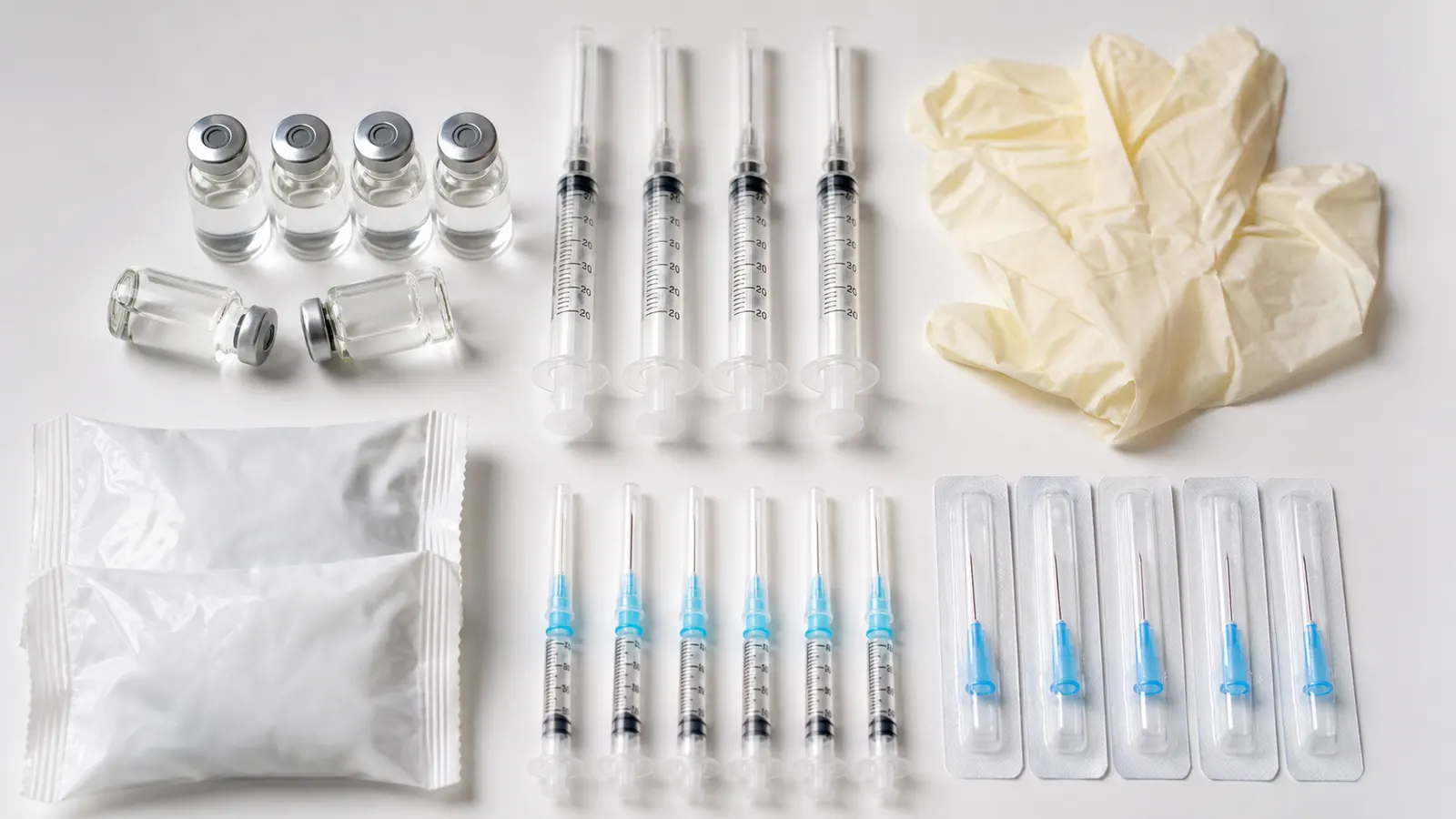
- Product cost per unit or syringe
- Injector compensation for the appointment time
- Room overhead, prorated per treatment hour
- Consumables such as needles, gloves, ice packs, and topical anesthetic
- Waste allocation for partial vials and reconstitution loss
That sum is your floor. Every price you set needs to clear it with margin to spare.
Understand the Botox and Filler Market Rate Picture
Botox runs $10 to $20 per unit, with the American Society of Plastic Surgeons listing the average cost of botulinum toxin injections at $435 per treatment. Dermal fillers typically range from $500 to $1,500 per syringe depending on product, provider, and treatment area.
Those ranges are wide for a reason. Geography moves the floor by a wide margin: a mid-market city practice and a Manhattan injector are playing very different games. Provider credentials matter too, with NPs, PAs, and board-certified physicians each commanding different patient expectations. Brand tier adds another layer, as Sculptra and Radiesse carry different cost structures than basic hyaluronic acid fillers.
Use these figures as a reference point, not a target. Knowing where the market sits tells you what patients have seen elsewhere, but it does not tell you where your price should land.
Choose a Pricing Model That Fits Your Practice Goals
Four pricing models show up most often in aesthetics practices, and each fits a different situation.
- Cost-based pricing: You build up from your true treatment cost and add a target margin. Reliable, but it can leave money on the table if your market supports higher rates.
- Value-based pricing: You price to the perceived outcome, not the syringe. Works well for experienced injectors with strong patient loyalty and a results-focused brand.
- Competitor-based pricing: You match the market rate. Low effort, but you inherit someone else's math.
- Tiered or package pricing: You create entry, standard, and premium options. Useful for practices with mixed patient demographics or multiple injector experience levels.
A new practice building volume often leans cost-based to stay competitive while building patient trust. An injector with a full waitlist can move toward value-based and charge accordingly. Tiered menus work best once you have enough patient history to know where demand clusters.
Price Per Unit vs. Price Per Area: Choosing the Right Structure for Injectables
Per-unit pricing charges patients for exactly what gets injected. If a forehead takes 15 units at $15 each, the bill is $225. Patients who need fewer units pay less, which feels fair. The downside is that pre-appointment conversations often get tangled in unit estimates, and patients quoted ranges elsewhere arrive with anchored expectations you may need to reset.
Per-area pricing sets a flat fee by treatment zone regardless of units used. A forehead is $250 whether it takes 12 units or 20. This simplifies booking, removes the unit-count haggling, and makes your menu easier to market. The risk is absorbing higher-usage patients at a fixed price, compressing margin on the cases that cost you more to treat.
Per-Unit Pricing | Per-Area Pricing | |
|---|---|---|
How it works | Patient pays for each unit injected (e.g., 15 units × $15 = $225) | Flat fee per treatment zone regardless of units used (e.g., forehead = $250) |
Best fit | High-volume practices with price-conscious patients | Premium brands where patients trust the injector and want simple menu pricing |
Main advantage | Patients pay exactly for what they receive; feels fair for lower-unit cases | Simplifies booking, removes unit-count haggling, easier to market |
Main risk | Pre-appointment unit-estimate conversations; anchored patient expectations | Higher-usage patients absorbed at a fixed price, compressing margin |
Documentation note | Billing and clinical charting naturally aligned | Billing fee and EMR inventory deductions must stay aligned (Decoda handles this natively) |
One compliance note worth flagging: if you charge per area but document per unit in the clinical record, as most EMRs require for charting and inventory, your billing and documentation need to stay aligned. Decoda Health handles this natively through its checkout checklist, which supports billing by dose for Botox, Dysport, and fillers while keeping inventory deductions accurate.
Many practices run both structures simultaneously: per-unit for first-time patients who want granular control, per-area for returning clients who trust the injector and want simplicity.
How to Use Value-Based Pricing for Injectables
Patients booking with a highly credentialed injector who offers a thorough consultation and customized treatment planning are paying for confidence that the outcome will look right on their specific face.
The value drivers that support above-market rates are concrete:
- Injector credentials and years of hands-on experience with varied anatomy
- Consultation depth and individualized treatment mapping, not a one-size approach
- Product selection matched to the patient's anatomy and goals
- Documented before-and-after outcomes that set realistic expectations
- Safety protocols, proper dilution standards, and emergency preparedness
Practices that communicate these factors through their intake process, consultation, and follow-up care create conditions where patients feel the price is appropriate.
Build a Tiered Service Menu to Protect Margins
A flat menu collapses every patient into the same box. Tiered pricing gives patients a lane while protecting your margin on the higher-volume, lower-complexity work.
A workable three-tier structure for injectables looks like this:
- Standard: Treatment only, efficient appointment, competitively priced to attract new patients
- Enhanced: Treatment plus a detailed consultation, custom dosing plan, and a follow-up check-in
- Premium: Full facial assessment, multi-area treatment planning, before-and-after documentation, and priority scheduling
The middle tier does most of the work. Patients anchor to it because it reads as the reasonable choice between basic and indulgent. Price it to carry solid margin, and let the standard tier serve as the entry point that converts into repeat visits, not your primary revenue engine.
Two things kill tiered menus fast: overlapping benefits and vague names. If a patient cannot explain the difference between your tiers in one sentence, the menu needs simplification. Name each tier by what it includes, not by how premium it sounds.
Packages, Prepaid Units, and Memberships: Turning Injectables Into Recurring Revenue
Single-visit injectable pricing leaves retention entirely to chance. Prepaid injectable packages and memberships change that by collecting revenue upfront and giving patients a structural reason to return.
Med spa membership programs grew 24% as recently as 2024, and packages now represent $29 of every $100 spent at med spas, up 38%, according to International Spa Association research. Practices that lock in recurring injectable spend outperform those chasing one-time appointments.

- Set a unit minimum on prepaid Botox packages so discounts only trigger at volumes that protect your margin
- Cap rollover to one cycle to prevent credit accumulation that stalls rebooking
- Build membership benefits around priority scheduling and consultation access (including VIP memberships, beauty banks, and patient wallets), beyond per-unit discounts, so the value isn't purely price-based
- Price filler bundles per syringe commitment so multi-area treatment plans bundle naturally
A patient who prepays 60 units annually at a modest discount still generates more predictable revenue than one who books reactively twice a year at full price.
Apply Psychological Pricing to Influence Patient Decisions
Patients read price lists the way they read menus: scanning for signals about quality, fairness, and what everyone else is probably ordering. The numbers matter less than how they sit relative to each other.
Anchoring is the most useful lever here. A $900 premium tier at the top of your menu makes a $650 mid-tier read as reasonable, even if $650 would have felt steep without that anchor. For this to work, the premium option needs to be real and bookable. A fake anchor erodes trust fast if patients ask about it.
Round numbers signal confidence in a premium context. A $700 filler appointment reads as a considered price from a provider who knows their work. $697 reads as discounted. Charm pricing like $199 instead of $200 can work for entry-level services but undercuts the clinical positioning most injectors are building toward.
Menu length matters too. A long list creates comparison paralysis. Three to four clearly distinct options is enough.
How to Raise Prices Without Losing Patients
Raising prices is almost always the right call, and almost always announced badly. A price increase communicated poorly feels like a surprise fee. Communicated well, it reads as a reflection of your practice's growth.
Time increases to hit before peak demand, not during it. Announcing a Botox price change in early April, when spring bookings are already surging, gives patients no room to adjust. Announce in late January or early August when booking pressure is lower and patients have time to prepay at current rates before the change takes effect.
What the communication should include:
- The effective date of the new pricing
- An invitation to prepay or lock in current rates before that date, with a clear deadline
- A brief, confident rationale tied to product cost or expanded service quality, not an apology
Grandfathering existing patients is worth considering for your highest-retention clients, but set a defined endpoint. Offer grandfathered rates for one prepaid package, then let the new rate apply. Framing it as a "loyalty window" (not a permanent carve-out) keeps the relationship intact without creating a precedent.
One email, sent two to four weeks before the effective date, is enough. Overthinking the language signals anxiety. Patients take cues from your confidence in the communication itself.
When and How to Audit Your Pricing Over Time
Set a calendar reminder to review injectable pricing at least twice a year. Most practices skip this step, then react to margin compression after the fact.
A few signals should pull that review forward ahead of schedule:
- A product cost increase from your distributor
- A new injector hire at a different compensation rate
- Occupancy consistently above 85%, which signals underpricing
- A notable shift in your local competitive set
The spread between commodity pricing and optimized pricing is real. The median med spa ticket sits at $216 while the 90th percentile reaches $484. That gap reflects pricing architecture, not patient volume alone. Before rolling a price change across the full menu, test it on one service with a defined patient segment, run four to six weeks of data, watch conversion and rebooking rates, then decide whether to extend it.
How Decoda Health Helps Practices Price, Package, and Retain Injectable Clients
Pricing decisions made on paper only hold if your software can actually run them. Decoda Health's membership billing configuration supports the structures described throughout this guide: prepaid unit packages with volume-based discount tiers, rollover caps, and multi-frequency billing cycles that align to how injectable clients actually return.
Clinic partners see an average of 1.5x more appointments and a 70% reduction in call volume, with freed front-desk capacity redirected toward the retention workflows that injectable revenue depends on.
The med spa patient churn problem is concrete: when patients rebook at five months instead of three, the average practice loses an estimated $62,247 per year (Decoda Health internal data). Decoda Health's automated follow-ups nudge patients back on schedule without manual outreach, so visit intervals don't quietly expand while your team handles other tasks. Revenue analytics by treatment type and provider mean that when your biannual pricing review arrives, the data is already there.
Final Thoughts on Med Spa Injectable Pricing Strategy
Your pricing should reflect your costs, your skills, and the experience patients get when they book with you. Copy a competitor's menu and you inherit their math, which may or may not work. Build from the ground up and you control the margin. See Decoda Health's injectable package pricing with a short intro call.
Frequently Asked Questions
What's the right way to price Botox per unit vs. per area for a med spa?
Per-unit pricing works well for high-volume practices with price-conscious patients who want to pay exactly for what gets injected. Per-area pricing suits practices with a premium brand and a patient base that trusts the injector enough to skip the unit-count conversation. Many practices run both simultaneously — per-unit for first-time patients, per-area for returning clients — and the structure you choose has real documentation consequences: your billing method and clinical charting need to stay aligned, since most EMRs track and deduct inventory by dose even when you're collecting a flat area fee.
How do I price Botox and filler services at my med spa without undercutting my own margins?
Start with your true cost per treatment — product, injector time, room overhead, consumables, and waste — before you look at a single competitor menu. That sum is your floor, and any price set below it loses money regardless of how busy your schedule looks. From there, layer in your pricing model: cost-based if you're building volume, value-based if your injector credentials and consultation depth justify above-market rates, or tiered if your patient mix spans different expectations.
What's the best botox pricing strategy for a med spa that wants to build recurring injectable revenue?
Prepaid unit packages and memberships are the most reliable structures for turning one-time injectable appointments into predictable revenue. Set a unit minimum so discounts only trigger at volumes that protect your margin, cap rollover to one cycle to prevent credit buildup, and build membership value around priority scheduling and consultation access rather than per-unit discounts alone. Practices that lock in recurring injectable spend consistently outperform those chasing single visits — memberships grew 24% in 2024, and packages now represent $29 of every $100 spent at med spas.
How does Decoda Health handle filler and Botox billing when a practice runs per-area pricing but needs per-unit clinical documentation?
Decoda Health's checkout checklist supports billing by dose for Botox, Dysport, and fillers natively, which means inventory deductions stay accurate at the unit level even when a patient is charged a flat area fee at checkout. The clinical record and the billing flow stay aligned without manual reconciliation between modules. This matters most for practices running both pricing structures simultaneously, where the same visit may involve a per-unit charge on one area and a flat fee on another.
When should a med spa audit its filler and injectable pricing, and what signals should trigger a review ahead of schedule?
A full med spa service pricing review should happen at least twice a year. Pull the review forward when a distributor increases product cost, when you bring on an injector at a different compensation rate, or when occupancy runs consistently above 85% — that last signal usually means you're underpriced. The gap between median and optimized injectable pricing is real: the median med spa ticket sits at $216 while the 90th percentile reaches $484, and that spread reflects pricing architecture more than patient volume.
Should I price Botox differently for a new patient versus a returning patient at my med spa?
Structurally, yes — many practices run per-unit pricing for first-time patients who want granular control over their bill, then offer per-area flat pricing or prepaid packages to returning clients who trust the injector and prefer simplicity. The practical benefit is that your entry price stays competitive enough to convert new patients while your recurring revenue structure captures the loyalty of those who already know your work.
Can I configure different Botox or filler service pricing for a master injector versus a newer injector in the same practice?
Yes — practices can set provider-level pricing within their scheduling configuration so a master injector's appointments carry a different rate than a less experienced provider's. This lets you reflect real differences in credential and demand without flattening your menu to the lowest common denominator, and it gives patients a clear reason to book the premium tier.
How do I handle leftover Botox units when a patient accumulates credits across multiple packages bought at different price points?
Set a rollover cap of one billing cycle on any prepaid package so credit accumulation stops compounding before it creates a redemption liability. When patients buy packages at different promotions, track units at the individual package level in your clinical record rather than pooling them, which keeps your cost basis clean and prevents a patient redeeming discounted units against a service cost that has since increased.
What's the fastest way to raise filler prices at my med spa without triggering patient cancellations?
Announce the increase two to four weeks before it takes effect, offer a prepay window at the current rate with a clear deadline, and keep the communication short and confident — one email is enough. Timing matters: late January or early August works better than peak spring season, when patients are already booking and a price change reads as a surprise rather than advance notice.
How does a med spa track Botox unit deductions at the sub-unit level when different patients in the same session use partial vials?
Accurate sub-unit tracking requires your EMR to deduct inventory at the dose level at the moment of treatment documentation, not at the end of the day. Decoda Health's checkout checklist connects clinical charting directly to inventory deduction, so each patient's dose pulls from the correct vial count in real time and partial-vial waste is accounted for without a manual reconciliation step at close.
What's the difference between a prepaid Botox package and a med spa membership, and which one is better for injectable retention?
A package is a fixed pre-purchase of units or sessions — a patient buys 60 Botox units upfront and draws them down over time. A membership is a recurring billing relationship that may include a unit or visit allowance per cycle along with other benefits like priority scheduling or consultation access. Packages drive a single committed transaction; memberships drive ongoing billing and consistent return intervals, making them the stronger tool for injectable retention when configured with a unit minimum and rollover cap.
How do I write a Botox price increase announcement that doesn't sound like an apology?
Lead with the effective date and the prepay window, not with a lengthy explanation. One sentence on the rationale — product cost increases or expanded service quality — is enough; anything more reads as defensive. Patients take cues from your tone, and a short, direct message signals that the price reflects the value of the service, not a reluctant adjustment.
What psychological pricing tactics actually work for filler menus at a med spa?
Anchoring is the most reliable lever: place a premium option at the top of your menu so your target tier reads as the reasonable middle choice. Round numbers signal confidence in a clinical context — $700 reads as a considered rate from a skilled injector, while $697 signals a discount mentality that undercuts the positioning most injectors are building. Keep your menu to three or four options; beyond that, patients stall rather than choose.
How can variable-dose injectables like Botox or Dysport be tracked and billed accurately when the number of units varies per patient visit?
The billing and inventory system needs to capture the actual dose administered at checkout, not a pre-set estimate, so the invoice and the clinical record match the treatment delivered. Decoda Health's checkout checklist supports billing by dose for Botox, Dysport, and fillers, which means the unit count entered during treatment documentation flows directly into the invoice and deducts from inventory in the same step — no separate reconciliation required.
How do I structure a filler pricing menu when my practice offers both hyaluronic acid fillers and longer-lasting products like Sculptra or Radiesse?
Price by product tier and treatment complexity rather than grouping all fillers under a single per-syringe rate. Hyaluronic acid fillers are a reasonable starting point for entry-level menu pricing; Sculptra and Radiesse carry different cost structures, require more provider expertise, and typically involve multi-session protocols that justify separate line items with their own package pricing. A bundled multi-session price for collagen stimulators often converts better than quoting per-vial, because it anchors the patient to a treatment plan rather than a unit cost.