

How AI Ambient Scribes Work in a Med Spa Setting (Aug 2026)
AI ambient scribes reduce med spa charting time and improve note accuracy. See real workflows and compliance tips for August 2026.

TL;DR
5 key points- 01Ambient scribes generate a complete clinical note by the end of the visit, with review taking under two minutes.
- 02Aesthetic providers running 15-25 treatments daily face compounding documentation load that generic templates were never built to handle.
- 03A scribe built into your EMR produces context-aware notes; a standalone tool creates a second manual workflow to maintain.
- 04Require a signed BAA before go-live; see the HIPAA checklist section for breach cost context.
- 05Decoda Health's AI Scribe runs natively inside the EMR, auto-updating inventory and billing when a note is signed.
What an AI Ambient Scribe Actually Does in a Clinical Setting
An ambient scribe listens to a patient encounter in real time and generates a clinical note automatically, without any manual input from the provider. The provider never presses a button mid-appointment. Nobody hands the patient a recording device. There is no dictating into a microphone after the room clears.
Dictation tools make the provider narrate the visit. Human scribes put another person in the room. Ambient AI runs in the background, reads the clinical context, and produces a structured clinical note by the time the patient heads out the door.
Why Documentation Burden Hits Aesthetic Providers Hard
Aesthetic visits are short by design. A Botox appointment might run 20 minutes. The note attached to it still has to record units per injection site alongside product lot numbers, dilution ratios, patient-reported concerns, before-and-after photo references, and any contraindications discussed. That is a dense amount of structured detail for a visit that is over before the provider can sit down.
Primary care physicians deal with documentation burden too. A multisite JAMA study found AI-powered scribes reduced total EHR time by 13.4 minutes per 8 scheduled patient hours across five academic health systems. Aesthetic providers face a compounding version of this problem: many run 15 to 25 treatments in a single day, stacking that load across dozens of visits with product-specific precision requirements that generic note templates were never built to handle. At that volume, a single skipped lot number or dose adjustment is the one a patient asks about later.
How an AI Ambient Scribe Works: The Step-by-Step Flow
The workflow runs start to finish with the provider's active role kept minimal by design.
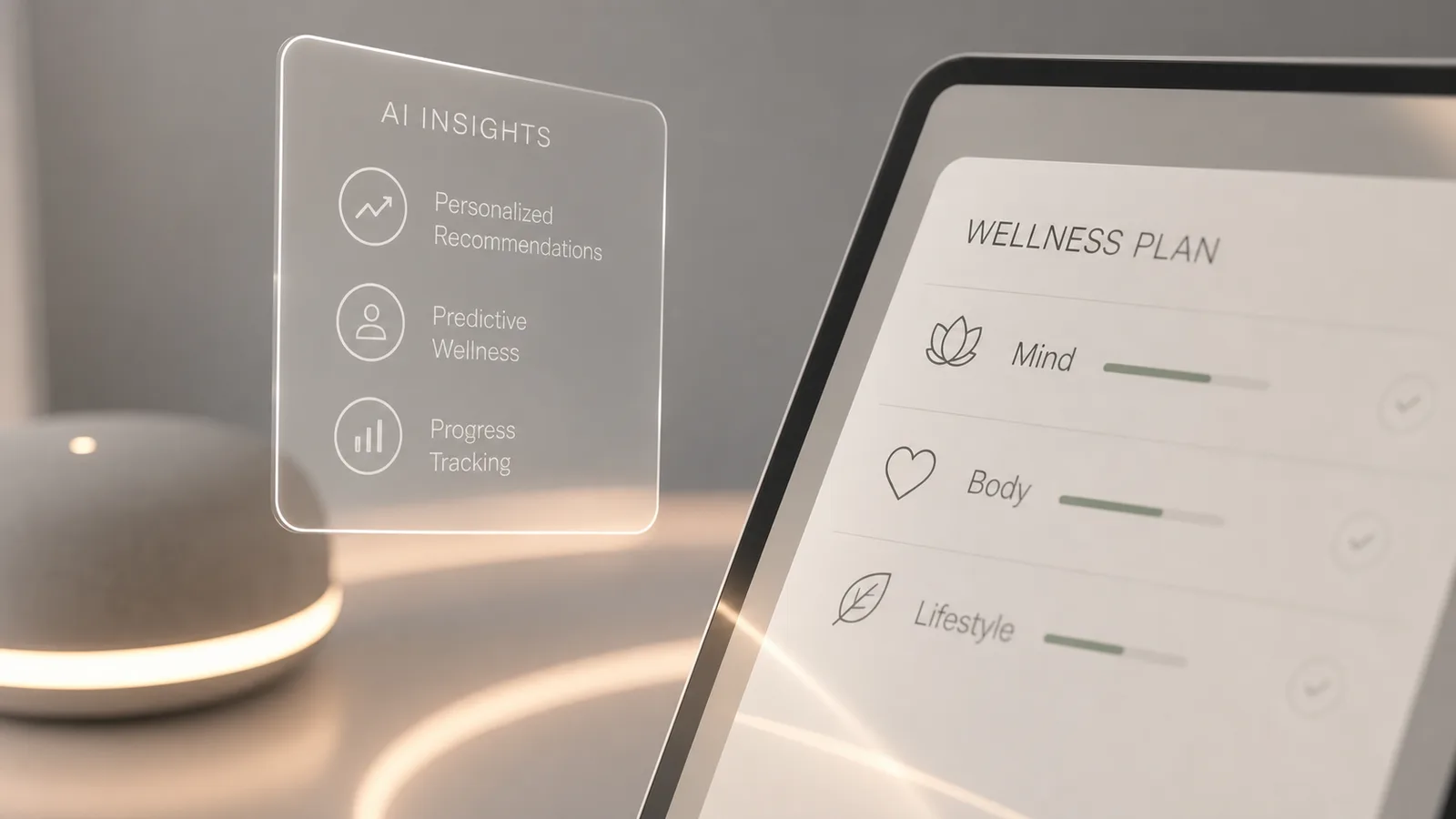
- The provider opens the patient chart and starts the session in the scribe interface before the appointment begins.
- The ambient mic picks up the conversation as it happens, no narration required.
- The AI parses clinical content from the dialogue, separates it from small talk, and maps it into the note structure.
- At the end of a visit, a draft note appears in the chart for the provider to review, edit if needed, and sign.
Review typically takes under two minutes. The provider reads, adjusts any details, and signs off. The note is locked, timestamped, and stored against the patient record before the next appointment starts.
What Gets Captured: Aesthetic-Specific Note Types
Generic note templates were built for primary care. Aesthetic documentation is a different animal entirely.
A well-configured ambient scribe captures the specifics that actually matter by treatment type:
- Injectables: units per injection site, product name, lot number, dilution ratio, and placement notes
- Laser and energy-based treatments: device used, wavelength, fluence, pulse duration, passes per zone, and skin response
- Weight loss and GLP-1 protocols: dosing, titration decisions, vitals, and patient-reported side effects
- IV therapy: formulation, volume, infusion duration, and any patient reactions noted
Where this matters most is in the details a provider mentions once mid-appointment and would otherwise reconstruct from memory later. Lot numbers for injectable inventory tracking, fluence settings for laser liability, dose adjustments for a weight loss patient on week six. These are the fields that get skipped when providers chart from memory at the end of a shift.
The HIPAA Compliance Checklist for AI Scribes
Some compliance boxes need to be checked before any AI scribe touches a patient conversation. Healthcare remains the costliest sector for data breaches, with the average breach running $7.42 million in IBM's 2025 Cost of a Data Breach report. For a med spa, that exposure is real, and FTC health data rules add another layer of obligation.
- Business Associate Agreement (BAA) signed with the scribe vendor before go-live
- PHI encrypted both in transit and at rest, with documented standards
- Patient notification policy in place disclosing ambient recording
- Data retention and deletion rights clearly defined in the vendor contract
If a vendor hesitates on the BAA, walk.
Standalone AI Scribe vs. Scribe Built Into Your EMR
Two deployment models exist, and the difference shows up in daily workflow more than in feature lists.
A standalone scribe generates a note, then stops. The provider copies or exports that note into their EMR manually. That re-entry step is small until it isn't: across 20 appointments, it adds up fast, and the scribe has no access to the patient's prior visit history, active treatments, or product usage when generating the draft.
A scribe built into the EMR has the full chart open while it listens. It already knows what was injected last time. It can see what the patient flagged at intake forms and which lot numbers are active in inventory. The note it generates carries that history forward, so a returning patient reads like a returning patient.
Standalone scribes are often faster to adopt but create a second workflow to maintain. Native scribes require buying into a full system, but note quality and downstream data connectivity are meaningfully better for high-volume aesthetic practices.
Standalone AI Scribe | Scribe Built Into EMR | |
|---|---|---|
Note destination | Exported or copied manually into the EMR | Written directly into the patient chart |
Chart context during generation | No access to prior visits, active treatments, or inventory | Full chart open: past treatments, intake flags, active lot numbers |
Re-entry required | Yes, adds time across every appointment | No; note, inventory, and billing update on sign-off |
Adoption speed | Faster initial setup | Requires buying into a full system |
Downstream data connectivity | Limited; isolated from EMR data | High; inventory deductions and superbill data flow automatically |
Best fit | Low-volume practices trialing AI documentation | High-volume aesthetic practices running 15 to 25 treatments per day |
Custom SOAP Templates and Specialty-Specific Charting
Generic SOAP templates were designed for outpatient medicine, and they fit an aesthetics visit poorly.
Custom templates let providers define which fields appear, and in what order, for each service type. An injectable note leads with units and placement. A laser note leads with device settings. A GLP-1 follow-up leads with weight, dose, and tolerability. Each template matches how the provider already thinks through that visit.
For practices running multiple service lines, this matters more. A wellness clinic offering IV therapy, weight loss, and injectables cannot run all three on the same note structure without losing clinical specificity, and med spa EMR lab integration adds another layer of data these templates must support. Decoda Health supports custom SOAP templates per treatment type, so the right fields appear for whatever is on the schedule. Over time, the AI learns provider-specific phrasing, meaning draft notes require fewer edits to match how that provider actually charts.
AI Scribe as Dispute Protection and Risk Management
Most providers adopt an ambient scribe to save time. The risk management angle surfaces later, usually after a difficult patient interaction.
A contemporaneous AI-generated note documents what was said during the appointment while it was being said. If a patient later claims a risk was never disclosed, or that a different product was discussed, the timestamped note is the record. Provider-typed shorthand only ever holds what the provider chose to write down. An ambient record holds the whole exchange.
Two scenarios show up most in aesthetic practices: a patient disputes that filler migration risk was mentioned, or claims the provider agreed to a result that was never guaranteed. A note that covers the consent conversation along with patient-reported concerns and any disclosed limitations gives the practice something concrete to reference. Decoda Health's AI Scribe builds this into the standard charting workflow, so the record exists on every visit without anyone doing extra work.
Real-Time Savings: What the Research Actually Shows
The published research comes from hospital and primary care settings, so the numbers need some translation before they apply to a med spa context.
A UCLA randomized trial covering 238 physicians and 72,000 patient encounters found Nabla users cut documentation time by nearly 10% compared to a control group, aligning with the JAMA time-savings finding cited earlier.
Those figures reflect lower-volume physician schedules. An aesthetic provider running 20 treatments a day stacks that documentation load across far more visits, so per-shift savings compound faster at volume.
Implementation Best Practices for Med Spa Teams
A handful of setup decisions determine whether rollout goes smoothly or stalls.
Set accuracy expectations for weeks one through four. Early drafts require more edits while the AI calibrates to provider terminology and phrasing. Two to three weeks of consistent use typically closes most of that gap.
- Train staff on patient disclosure before appointments begin. Simple, factual language works: "We use an ambient scribe to help with charting."
- Standardize the review-and-sign workflow within a consistent window between appointments. End-of-day batch signing is where errors accumulate.
- Flag multi-provider rooms as a setup consideration. Overlapping voices reduce transcription accuracy, so practices with shared treatment rooms may need adjusted microphone placement.
The most common pitfall is treating the AI draft as final without review. Build the confirmation step into the workflow from day one, using a smart charting workflow that enforces sign-off at the point of care.
How Decoda Health's AI Scribe Fits Into This Workflow
Decoda Health's AI Scribe runs natively inside the EMR, so nothing gets exported or re-entered. When a note is signed, inventory deductions update automatically and med spa superbill information carries forward in the same step. In Decoda's internal data across clinic partners, those partners report an average 80% reduction in check-in time, and draft notes are ready before the patient reaches the front desk, part of a broader AI aesthetic practice management approach that eliminates after-hours charting.
From a completed note, providers can generate a treatment plan and send it directly to the patient without leaving the chart. The scribe requires no separate activation step, so dispute protection is built into every appointment by default.
A faster draft also helps the physician side of the record: notes reach the signing queue the same day, which makes chart review and co-signing for RN and NP notes far easier to keep current.
Where Documentation Accuracy Pays Off in a Busy Day
Your notes carry more weight than most providers think until a dispute surfaces or an audit lands. Getting that documentation right, consistently, across every appointment in a busy day, is where ambient AI scribes do their best work. The time savings are real, but so is the clinical accuracy you gain when the record reflects what was actually said. Connect with Decoda Health to see how the scribe fits inside a live aesthetic workflow before committing to anything.
Frequently Asked Questions
How does an AI ambient scribe capture a provider conversation and turn it into a compliant clinical note without manual data entry?
The scribe listens through an ambient mic while the appointment runs, parses clinical content from the dialogue, and maps it into a structured note, all without the provider narrating or pressing record. By visit end, a draft note is waiting in the chart for a quick review and sign-off, typically under two minutes.
How customizable are clinical note templates for specialty-specific workflows like injectables, laser treatments, and GLP-1 protocols?
Fully. Custom SOAP templates let you define which fields appear and in what order for each service type: units and placement for injectables, device settings and fluence for laser, dosing and tolerability for weight loss visits. Decoda Health supports per-treatment-type templates, so the right fields load automatically based on what is on the schedule, and the AI calibrates to your phrasing over time so drafts need fewer edits.
Standalone AI scribe tool vs. scribe built into a med spa EMR: which produces better notes?
A standalone scribe generates a draft and stops there; the provider manually re-enters it into the chart, and the AI has no access to prior visit history or active inventory when writing it. A scribe built into the EMR, like Decoda Health's AI Scribe, has the full chart open while it listens (past treatments, intake flags, active lot numbers), so the note reflects that context instead of treating every appointment as a first visit.
What compliance requirements does a med spa need to meet before using an AI ambient scribe?
Four things must be in place before go-live: a signed Business Associate Agreement with the scribe vendor, PHI encrypted both in transit and at rest, a patient notification policy disclosing ambient recording, and clearly defined data retention and deletion terms in the vendor contract. If a vendor hesitates on the BAA, that is a direct signal to stop the evaluation.
How does AI documentation automation in a med spa protect against patient disputes?
An AI-generated note captures what was actually said during the appointment (consent disclosures, patient-reported concerns, disclosed limitations) with a timestamp locked to that visit. When a patient later claims a risk was never mentioned or a result was guaranteed, the contemporaneous record is the reference point. Decoda Health's AI Scribe builds this into the standard charting workflow, so every appointment produces that protection without any extra steps from the provider.
How does an AI scribe automatically generate follow-up tasks for the right staff members after a clinical note is signed?
A scribe built into your EMR can read the completed note and queue follow-up actions, such as scheduling a touch-up, sending post-procedure care instructions, or flagging a medical director review, routing each task to the correct role without the provider manually creating them. Standalone scribe tools stop at the draft note and have no access to your team structure or workflow rules, so that handoff falls back on staff. Decoda Health's AI Scribe connects the signed note directly to inventory deductions, billing data, and patient communication in one step.
Can an AI scribe handle documentation for internal medicine and concierge care workflows, or is it limited to aesthetic treatments?
A well-configured ambient scribe handles any encounter type where a provider speaks clinical content during the visit, including concierge physicals, functional medicine intake reviews, and chronic disease follow-ups. The limiting factor is template configuration: without fields built for vitals trends, medication reconciliation, or lab result interpretation, the draft note will miss the structure those workflows require. Practices running both aesthetic and medical service lines should confirm that custom SOAP templates can be built per service type before committing to any scribe tool.
How does a supervising physician remotely co-sign clinical notes in a med spa setting without needing full access to the rest of the system?
Role-based permissions let you configure a medical director login with chart review and co-signature access only, keeping sensitive business data like revenue reports and staff schedules off that view entirely. The physician reviews the AI-generated note, adds any annotations, and signs off asynchronously without being in the building. Practices in states with stricter medical oversight requirements, including those affected by new 2025 and 2026 licensing rules, should verify that their EMR supports this workflow before go-live.
Does telehealth integrate into the same scheduling and documentation system as in-person visits for a med spa?
Yes, if your EMR is built to handle it natively. Decoda Health supports virtual locations and telehealth appointments within the same scheduling and clinical documentation environment used for in-person care, so a post-procedure follow-up call generates a note in the same chart as the original treatment visit. Practices running telehealth from a separate video tool and charting from a separate EMR end up with split records that providers have to reconcile manually.
What is the best way to handle AI clinical notes for a med spa running multiple service lines like injectables, weight loss, and IV therapy without mixing up note structures?
Build separate SOAP templates for each service category so the scribe loads the right fields automatically based on what is scheduled. An injectable visit needs units per site and lot numbers at the top; a GLP-1 follow-up needs weight, dose, and tolerability fields first; an IV infusion note needs formulation and volume. Running all three on a single generic template forces providers to skip irrelevant fields or manually reorder content, which is where documentation errors concentrate.
How does an AI ambient scribe in a med spa capture personal patient relationship notes, like a patient mentioning a recent life event, so providers can reference them at the next visit?
The ambient mic captures the full conversational exchange, and a scribe with longitudinal patient context can surface those personal details alongside clinical history before the next appointment. This turns a small intake moment, a patient mentioning a wedding or a recent health change, into a recorded note the provider can reference without relying on memory. The practical benefit is consistency across a high-volume schedule where a provider sees 20 patients in a day and cannot be expected to recall every personal detail from the last visit.
Should I set up clinical workflows or marketing automation first when onboarding a new practice onto a med spa documentation system?
Clinical workflows first, every time. Documentation accuracy, consent capture, and note sign-off affect liability from day one; a missed lot number or unsigned consent on the first week of operation creates a compliance gap that marketing automation cannot fix. Once charting, intake forms, and provider sign-off workflows are running correctly, marketing automation builds on top of a clean patient record instead of a fragmented one.
Can AI clinical notes in a med spa EMR auto-populate from functional medicine intake questionnaires without duplicate data entry?
A native scribe connected to your intake forms can pull structured questionnaire responses directly into the clinical note, so a patient's symptom history, supplement list, or hormone panel answers appear in the chart without the provider retyping them. This only works when intake forms and clinical documentation live in the same system. If your forms tool is a third-party product and your EMR is separate, that data connection requires a custom integration or falls back to manual copy-paste.
How do AI-generated med spa clinical notes hold up during a compliance audit or regulatory inspection?
A timestamped, AI-generated note locked at sign-off produces a clear audit trail showing what was documented, when, and by which provider. That record is harder to dispute than a note typed from memory at end-of-shift, where timing and completeness are both in question. As states like New York and Rhode Island tighten medspa licensing enforcement in 2025 and 2026, contemporaneous documentation tied to specific providers and treatment details is what auditors look for first.
How long does it realistically take for an AI scribe to calibrate to a specific provider's charting style and terminology in an aesthetic practice?
Most providers see the largest editing gap in the first two to three weeks, while the AI calibrates to specialty-specific phrasing, product naming conventions, and the provider's preferred note structure. By week four of consistent use, draft notes typically require minor adjustments rather than significant rewrites. Setting that expectation before rollout matters: providers who treat week-one drafts as final output, or abandon the tool because early notes need editing, miss the accuracy gains that come from staying with the calibration period.